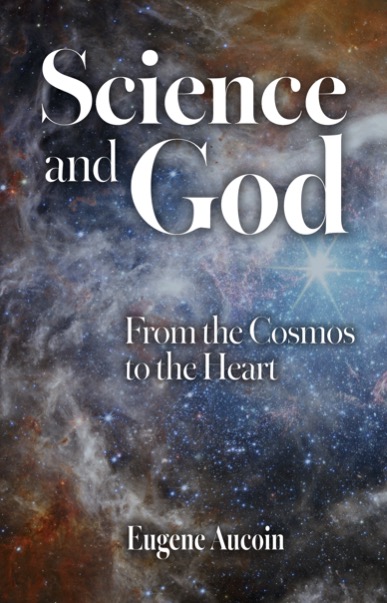
Science and God

From the Cosmos to the Heart

This warm and deeply engaging book is a gentle guide from the mind to the heart: from new and compelling evidence for God to knowing more about God to knowing God. It reconciles reason and faith through a fresh vision of the universe, life and love.

Whether you’re a person of faith or still searching, this highly acclaimed book invites you on an extraordinary journey. With Eugene Aucoin as your guide, explore the beauty and the precise fine-tuning of the cosmos, confront life’s deepest questions – including suffering – and discover a vision of God that is both intellectually satisfying and spiritually transformative. 

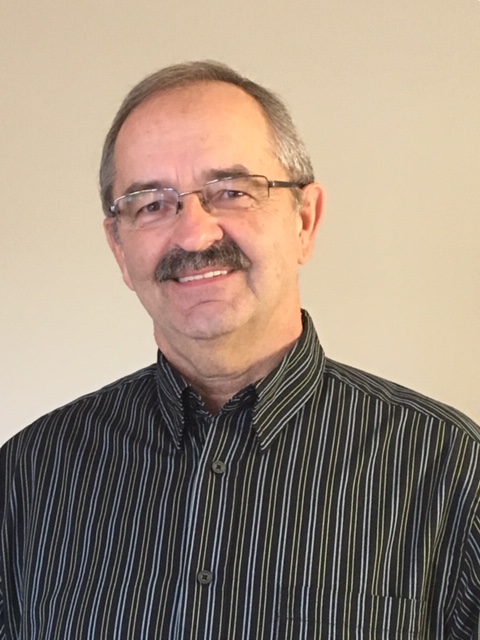
EUGENE AUCOIN is a retired human resources director and university professor who has spoken around the world about nurturing human potential. He is also the author of The Beatitudes: Eight Steps to Inner Peace and Happiness (Novalis, 2024)

Excerpt from Part 1: "The Beauty of the Universe"

There is great beauty in nature. We’ve always known that. But today’s new scientific discoveries have revealed such stunning and previously unsuspected features of our universe that they are beyond anything we had ever imagined.

We’re fortunate to live in a time of great scientific breakthroughs. Questions that we had always thought were out of reach of human knowledge are being answered, and they are awe-inspiring. They point overwhelmingly to a universe that was intended, designed with such precision and finetuning for life to emerge from it that it defies the imagination.

Every scientific breakthrough reveals a new, often unsuspected layer of nature, each time showing us a little more about the big picture, about a universe so finely tuned for life to appear in it, that it prompted Arthur Schawlow, Nobel laureate in physics and Stanford University professor, to say: “It seems to me that when confronted with the marvels of life and the universe, one must ask why and not just how. The only possible answers are religious … I find a need for God in the universe and in my own life.”

What can be more central to the human mind, after all, than to find knockdown proof that our universe was designed, that it has a purpose, and to learn something about how it was done? The meaning of life hangs in the balance, and it seems to me that’s where our search for what is true, using human means, should begin.

Through the lens of science, we witness the intricate patterns and laws that govern nature. We see the extraordinary harmony and elegance of quantum mechanics that regulate everything from the tiniest building blocks of nature to the vast expanse of the universe, all of which echo the perfection and beauty of an attentive, caring creator in ways our ancestors could never have imagined. As we delve deeper into the components of life, from the intricate design of a single cell to genetic codes, and to ecosystems that sustain all living things, we see the mark of a creator who values order and beauty.

Science is a search for truth, for what is real. And since all truth is God’s truth, for reasons we’ll see shortly, then it could be said that all scientific research is, in the end, an effort to understand the language of God as creator. The impulse to understand that language, to rejoice in the search for truth, by whatever name it’s called – whether it’s the elusive “theory of everything” that would fully explain and link together all aspects of the universe, or any other term – beckons many great scientists to be more than just spectators on the sideline of creation. They enroll heart and soul in the noble cause of serving their fellow humans by adding to our understanding of how nature works and how everything came about. They set their sights on something much bigger than themselves, because doing so is uplifting. Einstein summed up this fact much better than I ever could when he said: 

The most beautiful and most profound emotion we can experience is the sensation of the mystical. It is the sower of all true science. He to whom this emotion is a stranger, who can no longer wonder and stand rapt in awe, is as good as dead. To know that what is impenetrable to us really exists, manifesting itself as the highest wisdom and the most radiant beauty which our dull faculties can comprehend only in their most primitive forms – this knowledge, this feeling, is at the center of true religiousness.

Since the days of Einstein, the most recent discoveries in cosmology and neuroscience bear strong witness to an intent, and thus to a creator of the human soul for compelling reasons that we’ll see. The world-renowned genetics scientist Dr. Francis Collins describes, in his book The Language of God, how his discovery of some of the wonders of God’s creation was an important inspiration for him when he was leading an international team of prominent scientists to decode the human genome. It led to his conversion and Christian faith. His book’s title says it all.

Many leading scientists, including Nobel laureates, have now come to believe in God, as we will see, because of that divine “language of God” that they saw written throughout creation. To many of them, the discoveries were very moving experiences… like touching the face of God.

There can’t be two separate sets of truths, two opposing sets of realities: a religious one and a scientific one. There can only be one reality, one truth, which is why there can be no conflict between science and God. All truth is God’s truth, so the more scientific discoveries there are, ranging from the tiniest particles to the grandest scale, the more inspiring it is for the mind and heart to appreciate their creator. This was the case for another celebrated scientist, Dr. Francisco Ayala, a world authority on evolutionary biology and past chairman of the board of the American Association for the Advancement of Science, when he said: “For me, as an evolutionary biologist, the complexity of life, the beauty of life is very inspiring … It should inspire people to think more about God; to love God.”

1. H. Margenau and R.A. Varghese, eds, Cosmos, Bios, and Theos (La Salle, IL: Open Court, 1992), 105.
2. Albert Einstein, “What I Believe,” Forum and Century 84, no. 2 (October 1930): 193–194.
3. Cosmology is the study of the origin, structure, history and future of the entire universe. It’s closely related to astronomy.
4. Neuroscience is the study of the brain and nervous system.


Excerpt from Part 2: "Who or What Is God?"

We’ve taken a new look at the universe and saw that it had to have been intended and designed very accurately for any life to ever emerge from it, a fact that might inspire reverence for a designer so intimately involved in our lives.

So, the next natural question to ask is: Who is this creator? Who or what is God, really? What’s he like?

Throughout the ages, many learned and scholarly theologians have at times held some rather peculiar debates over the exact meaning of such mind-bending, creative qualifiers of God as his “omnipotence,” his “omniscience,” his “omnipresence,” his “immutability” or his “boundlessness.” It’s all good, but how useful is it really for anyone to know about such formidable descriptors of royal magnitude, the more obscure for being jewel encrusted? How practical is it for us to know what other mortals might think the immortal might look like? The Bible tells us God has revealed himself to be love itself (1 John 4:8). But love suffocates when dressed in glamour.

By contrast, we’ve all heard pearls of absolute wisdom roll out of the mouths of the most unlikely people. If we read, for instance, the life of Saint Teresa of Avila, a sixteenth-century nun, we can see what she thought of the counselling she had received from the so-called learned intellectuals about God’s revelations to her. When she met a poor and humble but experienced and saintly priest, it was his simple wisdom that gave her the wings to reach unparalleled heights of spirituality and reform her congregation.

Every person who has ever loved anyone during their life is living proof that the universe has a purpose. The purpose giver has even self-described as being love itself. As Benjamin Disraeli, a former British prime minister, once remarked: “We are all born for love … it is the principle of existence and its only end.” Some scientists have called God a mathematician of the highest order, for the reasons we saw in Part 1, but, since God is also love, he seems to want to keep things very simple when it comes to communicating.

A good way to start understanding someone is to learn what matters most for them. What, then, seems to matter most for the creator of the universe? What does he seem to value most? What might be his ethics, given what we know of the state of the world under his watch?

This question has led many people to ask: If God is a loving father, as the Bible says, then why does he allow all the injustice and suffering in the world? It’s not an easy question, but it must be addressed.

In this part of the book, we turn to the profound question of God’s ethics. For many people today, the reality of evil and suffering feels as though God should be placed on trial before a world court of ethics and charged with criminal negligence for allowing it. Some have already passed a guilty verdict, or denied his existence outright, based on what’s going on in the world.

I invite you to imagine yourself as a jury member in a court of appeal, weighing the charges raised against God. As we unravel these, we’ll also hear voices from history – character witnesses, so to speak – who testify for God and offer insight into how his goodness might be understood.

1. Although I refer to God in the masculine gender throughout the book for reasons of readability, God, of course, has no form, thus no gender.


Excerpt from Part 3: "The Peace of God"

In the Heart of the Silence

We often hear in church, “May the peace of God be with you.” But what is the peace of God? “

Peace, it’s been said, is not the absence of affliction, but the presence of God.” I agree. In Christian contemplation, inner peace and wellness are not the purpose, only by-products. Any search for wellness would imply be a return to the self. Our attention should remain on God. “Be still and know that I am God.” (Psalms 46:10) It’s in that stillness that God can best be known.

Be still, and know… that God is love, and that everything passes away except God, the only stability there is and can ever be in the world. “Let nothing disturb you, let nothing frighten you. All things are passing away: God never changes. Patience obtains all things. Whoever has God lacks nothing; God alone suffices.”

If you can sense that nothing is stable but God, or love itself, and that everything else will pass away, then you start to sense his perfection. I think this is experiential learning at its best, because we can then understand better why he said: “Peace I leave with you; my peace I give to you. I do not give to you as the world gives. Do not let your hearts be troubled, and do not let them be afraid” (John 14:27).

Be still and know… that finding God doesn’t need concentration techniques to elevate your mind to higher levels. God comes down to our level and draws us to him, asking of us only a receptive, welcoming attitude so he can get to work in us.

Be still and know… that God is present in the soul and that he’d like us to say: “Your will be done,” like in the Lord’s Prayer (Matthew 6:10). I think true free will is achieved when it is harmonized with God’s that way. That might sound contradictory on the surface, but it frees us from ourselves, which allows more room in us for God. Time spent with God that way, allowing ourselves to be loved by him, can be like a cozy candlelight dinner during which he teaches us his own science. This is neither idleness nor a mere search for wellness. It frees our mind from our never-satisfied ego and focuses it instead on him at a level deeper than words, images or thoughts, and inaccessible to sin or to anything but God. It’s a two-way street in which God might be in awe of our spirit because, as Saint Teresa of Avila said so well, the soul is God’s paradise.

Be still and know… that even a genuine desire to look for God means you’ve already found him. It means you’ve got enough faith in God that you can ask him for more of it. Jesus said, “Until now you have not asked for anything in my name. Ask and you will receive, so that your joy may be complete” (John 16:24).

If you persevere in finding some time for God in your daily rhythm, one or two periods of 15 to 20 minutes each, with time, this daily practice of centring on him will leave you feeling you’re in God’s hands throughout the day. It helps us understand and accept our spiritual poverty and maybe see it as our own form of poverty. “Blessed are the poor in spirit, for theirs is the kingdom of heaven” (Matthew 5:3). Notice Christ using the present tense, as if saying “even during their lifetime.” We’re born, after all, with empty hands and will die with empty hands. Time spent with God helps us realize that fact better; it knocks down our pride enough to realize our dependence on him, freeing us from any egocentric search for ourselves and from any grudges against others.

Time with God can also help us acquire the beatitude that Jesus spoke about, as described earlier.

All in all, this slow, inner transformation can begin in the simplest way by spending quiet time with God. If we can regularly set aside the noise and complexity of life and rest in his presence, accepting his compassion for our poverty of spirit, we’ll come to know God much better. “Be still,” he said, “and know that I am God.” In that stillness, we’re not asked to master theology or prove our worth but only to be with him. A daily practice of doing so allows God to draw us into the life he intended for us.


Praise for Science and God

Winner of the UK’s Page Turner Award in 2026

This book is a condensed and updated version of Has Science Killed God - Three Powerful Ideas that Will Reignite your Faith, which received the following recognitions and endorsements.
I highly recommend this book.
Exceptional – remarkable – colossal research - fresh perspectives – heartfelt – inspirational – relevant - a much-needed contribution.
Monsignor Valéry Vienneau
Archbishop of Moncton, N.B.
5 Stars! Aucoin touches the hearts and minds of his readers…
Writes with simplicity, energy, logic, and an uplifting tone, moving smoothly from one topic to another… Inspirational… Rekindles the light of our faith… This is no boring tome… Highly recommended.
Readers’ Favorite Reviews, USA
One of the best books I have ever read, and I've read a multitude.
I discovered many things in it, including the harmony and symmetry between science and faith. Anyone who, in their mind and heart, seeks the truth, the whole truth and nothing but the truth will find it in this book.
Guy A. Richard
Chief Justice of the Supreme Court of New Brunswick, Vice-Chair of the Canadian Judicial Council (retired)
A timely and astonishing book, impressively intelligent and so splendidly readable.
A fresh vision. A lucid work, and a great book.
Joseph Z. Daigle
C.M. Chief Justice of the Supreme Court of New Brunswick, (retired)
A readable, engaging, and reassuring volume
Mr. Aucoin reminds his reader of some of humanity’s deep values and offers encouragement to those who fear that faith can be only blind faith.
William Sweet, Ph.D. (Philosophy), Ph.D. (Political Science)
President of the World Union of Catholic Philosophical Societies; Director, Centre for Philosophy, Theology and Cultural Traditions, St. Francis Xavier University; President of the Canadian Theological Society; Numerous international titles, honors, and awards
Well-researched references to the frontier limits of current scientific inquiry. I very much enjoyed it.
Part 1 is an excellent summary of the current state of modern cosmology.
Grant Mathews, Ph.D.
Director, Center for Astrophysics, Notre Dame University, Ind., USA; Author of 16 books in astrophysics and cosmology; Outstanding Scientific Publication Award in Physics.
Great job of showing where science “ends” and then talking about the existence of God.
Excellent job of presenting broad conclusions concerning the physical laws and observations of the universe as currently accepted.
Carl P. Adams Ph.D. (Physics)
Chair, Department of Physics, St. Francis Xavier University; Recipient of various honours in science and contributor to many refereed, published articles in physics.
Compelling… I could not put it down from start to finish.
Fr. Edmour Babineau, Ph.D.
Head of Religious Studies and Theology at the University of Moncton, New Brunswick (retired); Theological advisor to the Moncton diocese, Canada.
Enlightening... I was amazed.
Sr. Lorraine Caza, Ph.D
Dean of Theology at the Dominican College of Ottawa; award-winning author, former Superior General of the Congregation of the Sisters of Notre-Dame and advisor to the Theological Commission of Canada’s National Conference of Bishops (retired)
I was fascinated… convincing… intellectual clarity… refreshing.
Fr. Daniel Deveau
Acadian District Superior of the Fathers of the Holy Cross, Secretary General of the Atlantic Canada Assembly of Catholic Bishops (retired)
Inviting, sincere, credible, and deeply fascinating.
Sr. Odette Leger
Superior General, Sisters of the Sacred Heart (retired)
Fascinating… a meaningful spiritual journey…
Captures the interest and engages the intellect…. A unique voice needed in today’s publishing world… clarity, heart, and perspective… writes with authority.
Cindy Lambert
Publishing Strategist, Summersault Group, USA; Former VP and Associate Publisher at Zondervan Publishers (part of Harper Collins); Formerly Senior Editor, Howard Books, Simon and Schuster

Where to Buy Science and God

  • Novalis.ca
  • Your local bookstore
  • Soon available on Amazon

About the Author

Throughout my career, I’ve had the privilege of teaching thousands of people how to develop their potential, both at university and in the public sector in Canada and around the world. This experience has deeply enriched my understanding of the human person. My journey, shaped by my love of science and my faith in God, led me to write with simplicity and sincerity. I’m grateful for the endorsement of senior theologians, scientists, philosophers, judges, and members of the clergy. My hope is to offer, through the teachings of Christ and reflections rooted in real life, accessible pathways to help each person move closer to God at their own pace.
©2026 Eugène Aucoin
Web Design